
ENSEMBLE · STRING QUARTET
Kronos Quartet
3×
Grammy Award-winning 80+
Recordings released 1,100+
Commissioned works Polar Music Prize
Recipient ABOUT
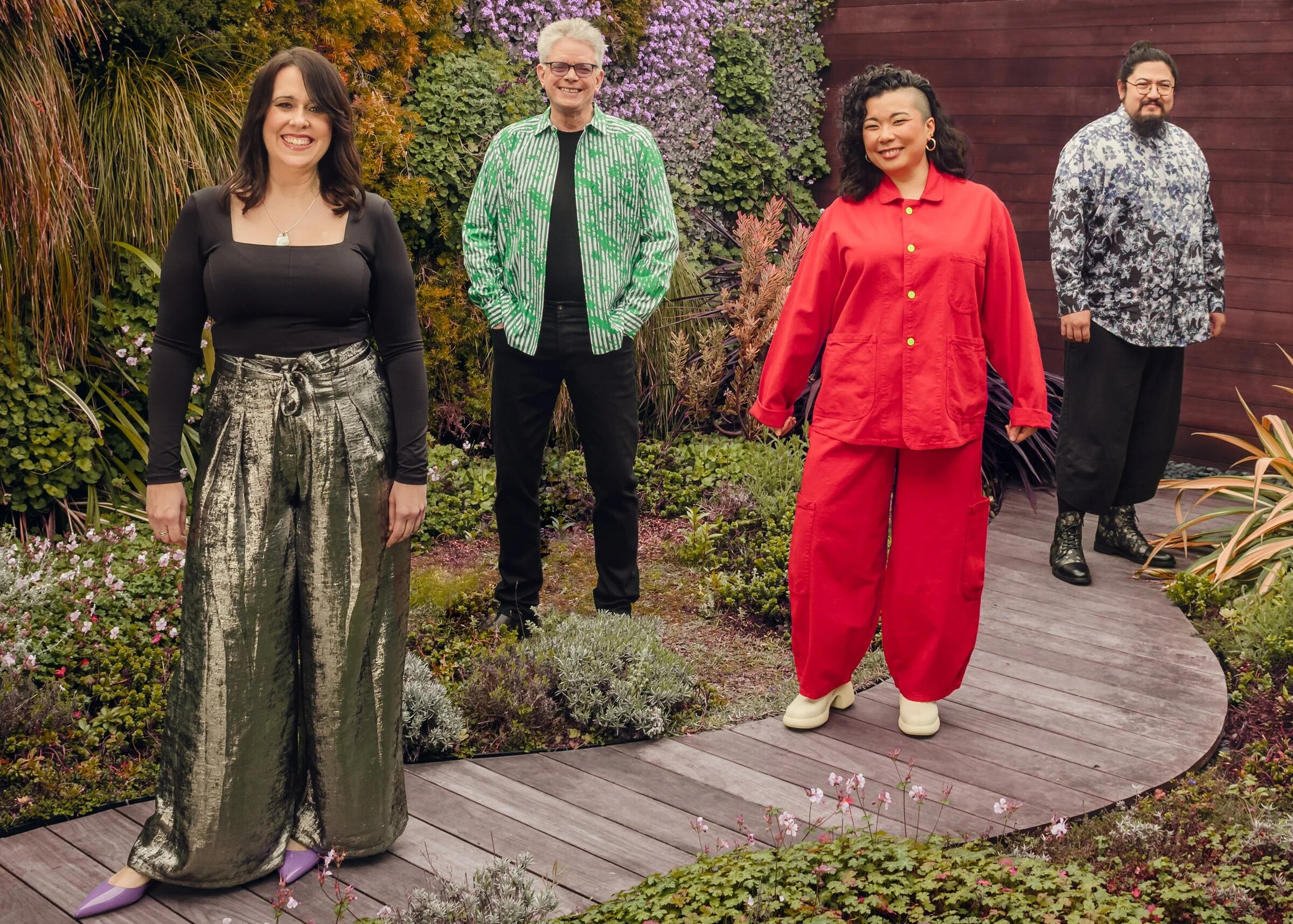
Since 1973, San Francisco’s Kronos Quartet — David Harrington (violin), Gabriela Díaz (violin), Ayane Kozasa (viola), and Paul Wiancko (cello) — has challenged and reimagined what a string quartet can be. Founded at a time when the form was largely centered on long-established, Western European traditions, Kronos has been at the forefront of revolutionizing the string quartet into a living art form. Today, with new voices and renewed vision, Kronos continues to forge the sound of the people and issues of our time.
Kronos stands among the most celebrated and influential ensembles. The group has performed thousands of concerts across six continents, released more than 70 boundary-pushing recordings, and collaborated with a remarkable range of composers and artists. Kronos has commissioned over 1,100 works and arrangements for string quartet — including the recently completed Fifty for the Future, a free online library of 50 new works from leading living composers that serves as a vivid expression of Kronos’ belief in open access and the continual reinvention of the string quartet repertoire.
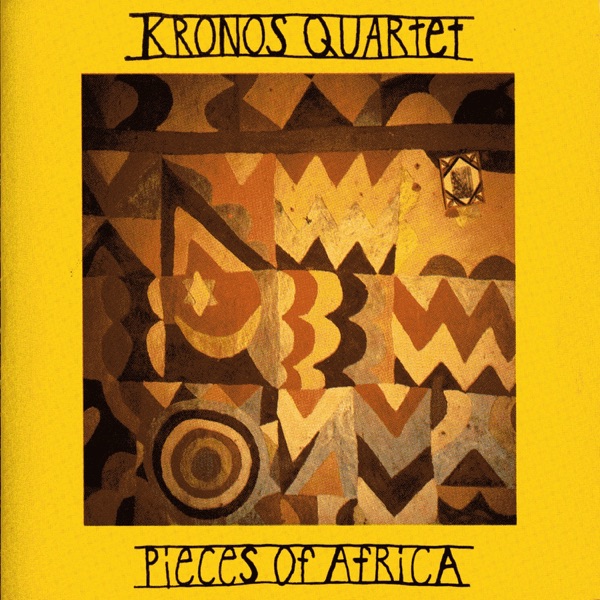
Kronos' contributions have been recognized with more than 40 awards, including three Grammy Awards, the Polar Music Prize, the Avery Fisher Prize, and the Edison Klassiek Oeuvre Prize. In 2024, the Library of Congress acquired the Kronos Quartet/Kronos Performing Arts Association Archive, a comprehensive collection of manuscripts, instruments, costumes, video and audio recordings, photographs, and more spanning five decades. Now housed permanently in the Library’s Music Division, the archive stands as a vital testament to Kronos’ impact on contemporary music and cultural history. That same year, their 1992 album Pieces of Africa was named one of twenty-five recordings to be inducted into the National Recording Registry, recognizing its enduring cultural and historical significance.
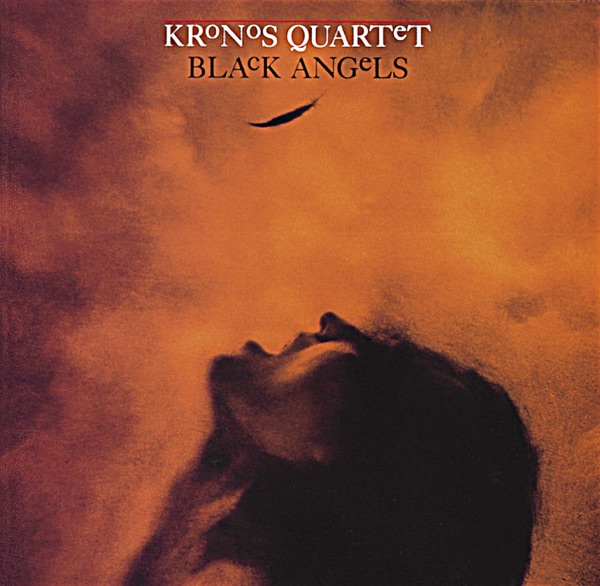
Kronos’ adventurous approach traces back to its origins. David Harrington formed the group after hearing George Crumb’s Black Angels, a groundbreaking work inspired by the Vietnam War and featuring bowed water glasses, spoken-word passages, and electronic effects. That singular moment ignited a lifelong mission: to expand the language of the string quartet and confront the world’s complexities through music.
Read full biography
From the outset, Kronos began building a bold and eclectic repertoire — performing and recording works by 20th-century masters like Sofia Gubaidulina, Astor Piazzolla, Alfred Schnittke, and Henryk Górecki; contemporary voices from around the globe such as Sahba Aminikia, Nicole Lizée, Vladimir Martynov, and Aleksandra Vrebalov; jazz legends including Charles Mingus, Thelonious Monk, Maria Schneider, and Sun Ra; rock icons like Jimi Hendrix, Sigur Rós, Pete Townshend, and Café Tacuba; and genre-defying artists such as Laurie Anderson, Trevor Paglen, and Tanya Tagaq.
At the heart of Kronos’ artistic identity is a spirit of fearless collaboration, reflected in long-running creative relationships with many of the world’s foremost composers, and resulting in a vast and ever-expanding body of commissioned work for string quartet. Among its most prolific partnerships is that with Terry Riley, whose works for Kronos include Sunrise of the Planetary Dream Collector (1980), Salome Dances for Peace (1985–86), and Sun Rings (2002). In 2025, the ensemble traveled to Japan to celebrate Riley’s 90th birthday and perform with him in concert — a testament to the depth and longevity of their connection. Another decades-long collaborator is Aleksandra Vrebalov, who has written more than 20 pieces for the ensemble, including Pannonia Boundless (1998); …hold me, neighbor, in this storm… (2007); and Beyond Zero (2014), a multimedia meditation on World War I created in collaboration with filmmaker Bill Morrison.
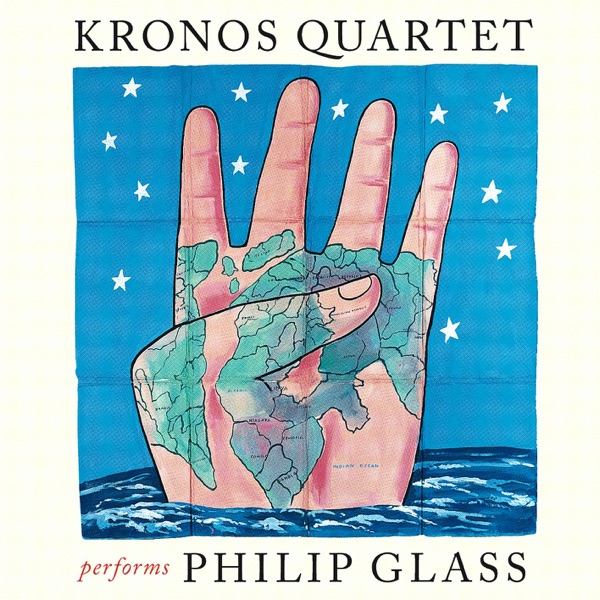
Kronos has also collaborated extensively with Philip Glass — recording an album of his string quartets in 1995 and premiering String Quartet No. 6 (2013) and No. 7 (2014); with Franghiz Ali-Zadeh, whose music is featured on their 2005 release Mugam Sayagi; and with Steve Reich, whose string quartets Different Trains (1989), Triple Quartet (2001), and WTC 9/11 (2011) were written for and recorded by the ensemble.
Kronos’ most ambitious commissioning initiative to date, Fifty for the Future, stands as a cornerstone of the ensemble’s legacy. Developed by the Kronos Performing Arts Association, the project commissioned 50 new works for string quartet — written by composers from around the world and designed specifically to train students and emerging professionals in the techniques of 21st-century repertoire. All scores, parts, recordings, and supplementary learning materials are available free of charge at 50ftf.kronosquartet.org. Although the library is now complete, its global impact continues to grow: tens of thousands of scores have been downloaded in more than 100 countries and territories worldwide. Supported by lead partner Carnegie Hall and a wide-ranging network of presenters, academic institutions, foundations, and individual donors, Fifty for the Future exemplifies Kronos’ enduring commitment to access, education, and the future of the string quartet.
Few ensembles have forged a more global or genre-defying path, with collaborations that span cultures, styles, and generations. Key musical partners include Chinese pipa virtuoso Wu Man (a collaborator since the early 1990s), Indian tabla master Zakir Hussain, Azeri vocalist Alim Qasimov, Bollywood legend Asha Bhosle, Iranian singer Mahsa Vahdat, Romanian ensemble Taraf de Haïdouks, and Mali’s Trio Da Kali. Their genre-defying range also includes punk icon Patti Smith, alternative rock band The National, Nine Inch Nails, and trailblazers like Laurie Anderson and Tanya Tagaq. Kronos has performed with cultural icons such as Paul McCartney, David Bowie, Allen Ginsberg, and Rokia Traoré; made a memorable appearance on Sesame Street; and shared the stage with Tom Waits, Rhiannon Giddens, Howard Zinn, Betty Carter, Van Dyke Parks, Caetano Veloso, and k.d. lang. The group has also contributed to recordings with Dan Zanes, Glenn Kotche, Dave Matthews Band, Joan Armatrading, Angélique Kidjo, and the San Francisco Girls Chorus. Their work has also inspired renowned choreographers — Merce Cunningham, Paul Taylor, Twyla Tharp, Alonzo King, and Eiko & Koma — to create work set to Kronos’ music. The ensemble’s performances and recordings explore themes of war, trauma, environmental collapse, social justice, and spirituality, making their work emotionally powerful and socially relevant.
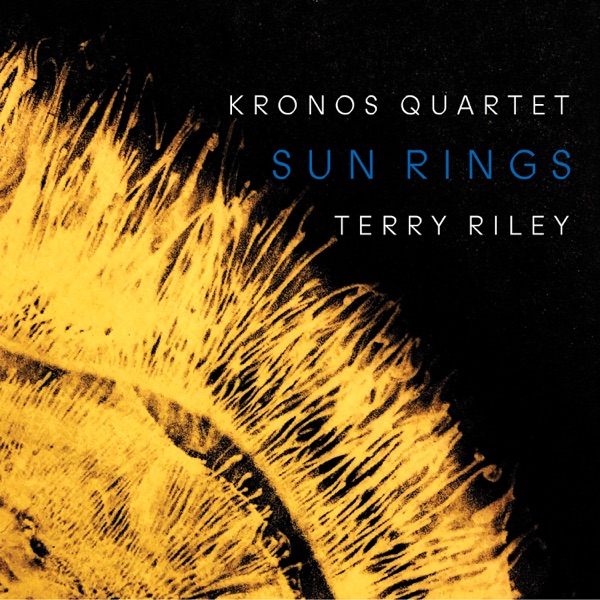
The Kronos discography on Nonesuch Records is both extensive and acclaimed, with three Grammy Award-winning albums: Sun Rings by Terry Riley (2019), Landfall with Laurie Anderson (2018), and Alban Berg’s Lyric Suite with soprano Dawn Upshaw (2003). Their recording projects have also included One Earth, One People, One Love: Kronos Plays Terry Riley (2015), The Kronos Explorer Series (2014), and Nuevo (2002), a vibrant tribute to Mexican music that earned Grammy and Latin Grammy Award-nominations. Pieces of Africa (1992), which brought African-born composers into the classical spotlight, was inducted into the National Recording Registry in 2024, and is among Kronos’ most widely recognized recordings. Recent albums include Songs and Symphoniques: The Music of Moondog (2023); Mỹ Lai (2022), an opera with Vietnamese multi-instrumentalist Vân-Ánh Vanessa Võ and vocalist Rinde Eckert; and Long Time Passing (2020), a tribute to Pete Seeger featuring Sam Amidon, Maria Arnal, Brian Carpenter, Lee Knight, Meklit, and Aoife O’Donovan. Boosey & Hawkes has published two volumes of Kronos Collection scores by Terry Riley, Hamza el Din, Aleksandra Vrebalov, and Osvaldo Golijov — extending the ensemble’s reach to future generations.
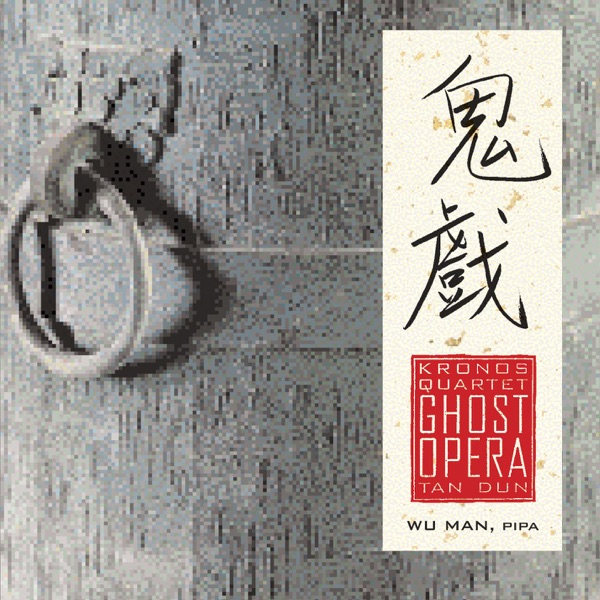
With its roots in the Vietnam War era, Kronos has spent five decades centering its work around the key issues of our time. Underscoring the idea that music should be in constant evolving interaction with the world, Kronos has commissioned, performed, and recorded works that engage with topics such as war and destruction (Jonathan Berger and Harriet Scott Chessman’s Mỹ Lai; Mary Kouyoumdjian’s Bombs of Beirut and Silent Cranes; Mariana Sadovska’s Chernobyl. The Harvest; Aleksandra Vrebalov’s Beyond Zero), the climate crisis (Laurie Anderson’s Landfall); social injustice (Bob Ostertag’s All the Rage; Zachary James Watkins’ Peace Be Till; Michael Abels and Nikky Finney’s At War With Ourselves); and existence and spirituality (Terry Riley’s Sun Rings; Tan Dun’s Ghost Opera).
Kronos spends several months of each year on tour, appearing in concert halls, clubs, and festivals around the world, including Carnegie Hall, BRIC Celebrate Brooklyn!, and BAM Next Wave Festival in New York; Royce Hall at UCLA; Big Ears in Knoxville, Tennessee; Palacio de Bellas Artes in Mexico City; the Barbican in London; the Philharmonie de Paris; the Muziekgebouw in Amsterdam; Haydn Hall at Schloss Esterhazy, Austria; The Arts Center at New York University Abu Dhabi; Shanghai Concert Hall; Suntory Hall in Tokyo; and the Sydney Opera House.
Kronos’ work has featured prominently in a number of films, including A Thousand Thoughts, a unique multimedia piece that blends live music by Kronos and narration by Sam Green with archival footage and filmed interviews to create a “live documentary” that tells the story of Kronos’ expansive career. Written and directed by Green and Joe Bini, the work premiered at the Sundance Film Festival in 2018 and has since toured around the world. Most recently, the Quartet performed on the soundtrack for Users (2021) and is both seen and heard in the documentary Zappa (2020). Kronos’ music has been featured in two Academy Award–nominated documentaries: Dirty Wars (2013) — for which Kronos’ David Harrington served as Music Supervisor — and How to Survive a Plague (2012). Kronos has also recorded complete film scores by Jacob Garchik for Guy Maddin’s The Green Fog (2017); Clint Mansell for Darren Aronofsky’s The Fountain (2006) and Requiem for a Dream (2000); and Philip Glass for Dracula (1999) — a restored edition of the 1931 Bela Lugosi classic.
The Quartet is committed to mentoring emerging performers and composers and has led workshops, master classes, and other education programs with Carnegie Hall’s Weill Music Institute, Kaufman Music Center’s Face the Music, Luna Composition Lab, Ruth Asawa San Francisco School of the Arts, San Francisco Conservatory of Music, Meadowmount School of Music, Banff Centre for Arts and Creativity’s Next Festival for Emerging Artists, the Royal Conservatory of Music (Toronto), and the Tokyo University for the Arts, among other institutions in the U.S. and abroad. Kronos has undertaken extended educational residencies at institutions such as Oakland School for the Arts, UC Berkeley’s Cal Performances, Holland Festival, The John J. Cali School of Music at Montclair State University, and New York University Abu Dhabi.
Based in San Francisco, the nonprofit KPAA staff manages all aspects of Kronos’ work, including commissioning, concert tours and local performances, recordings, education programs, and an annual self-produced Kronos Festival in San Francisco.
PRESS & REVIEWS
What the critics say
“Probably the most famous 'new music' group in the world.”
— Los Angeles Times
“Classical music's own Fab Four.”
— Rolling Stone
“Laurie Anderson's collaboration with the San Francisco-based string quartet presents a powerful, elegiac cycle of songs that show how human memory can be stronger than catastrophe.”
— Pitchfork
“For over 50 years, Kronos has re-taught us how to listen to music.”
— NPR
Discography
Recordings


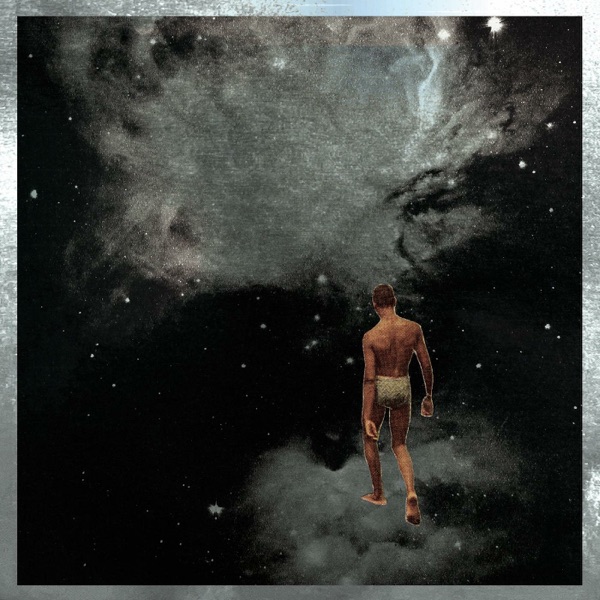


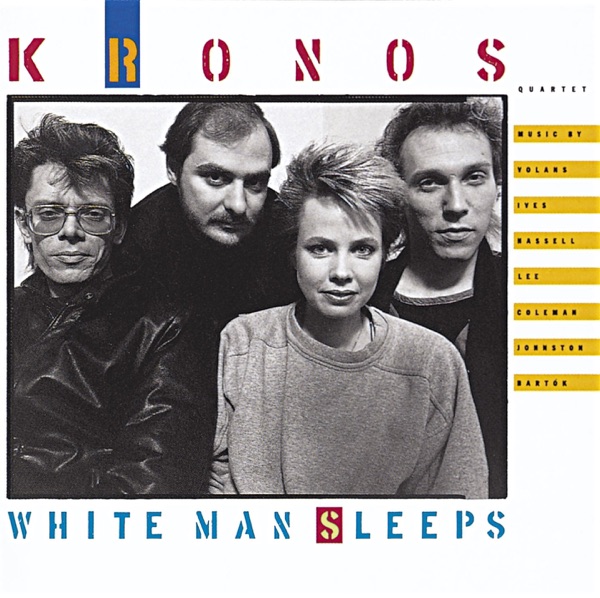
Long Time Passing: Kronos Quartet & Friends Celebrate Pete Seeger
Smithsonian Folkways · 2020



String Quartets




VIDEOS
Videos
2026-27
Programs & Repertoire
Program One
Steve Reich at 90
Every work Reich has composed for Kronos — Triple Quartet, WTC 9/11, and Different Trains — available as an all-Reich program or paired with Viet Cuong, Pérotin, Hildur Guðnadóttir, and John Coltrane.
Program Two
The Extraordinary Mind of Nicole Lizée
A portrait program of Lizée's fantastical, instrument-bending works for Kronos.
Program Three
Glorious Mahalia!
Activist voices of 20th-century America honoring Mahalia Jackson.
Program Four
The Evolving World of Kronos
Tailor-made programs on War, Civil Rights, and Climate Change.
Guest Collaborations
Half-program collaborations with Peni Candra Rini, Benedicte Maurseth, Mahsa Vahdat, Tanya Tagaq, or Wu Man.
On Stage
Featured Projects
Three Bones: Hearing the U.S.
String Quartet
Three Bones takes its name from the three smallest bones in the human ear — the malleus, incus, and stapes — nature's own amplifier, which transforms faint vibrations into the world of sound. A forthcoming multimedia presentation, the program shares that purpose: to amplify. As the United States marks its 250th anniversary in 2026, Kronos celebrates three American stories that deserve to be heard more widely, realized on stage through music, storytelling, vintage recordings, video, and visual art in a dynamic new concert form.
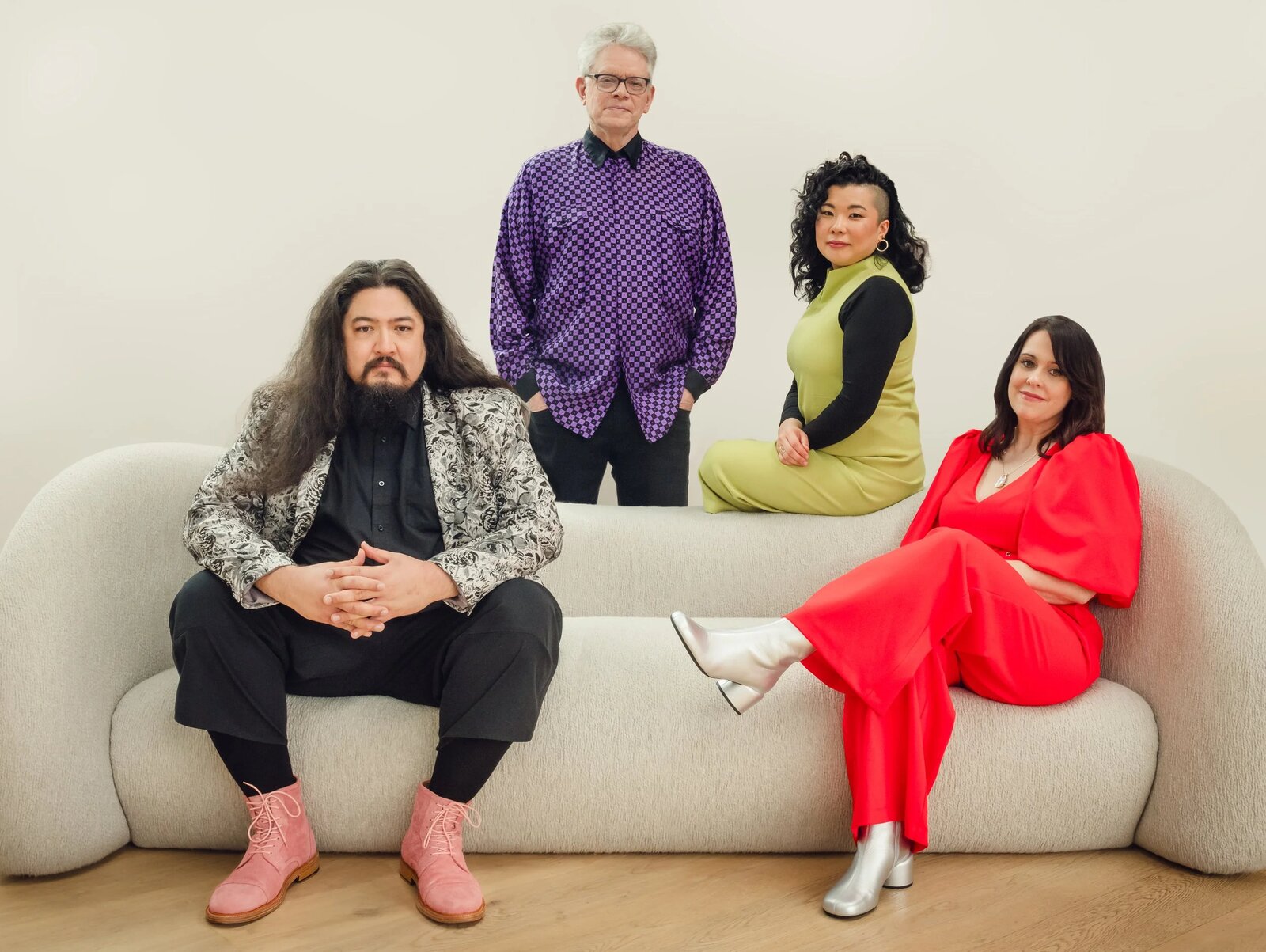
A Hard Rain
String Quartet
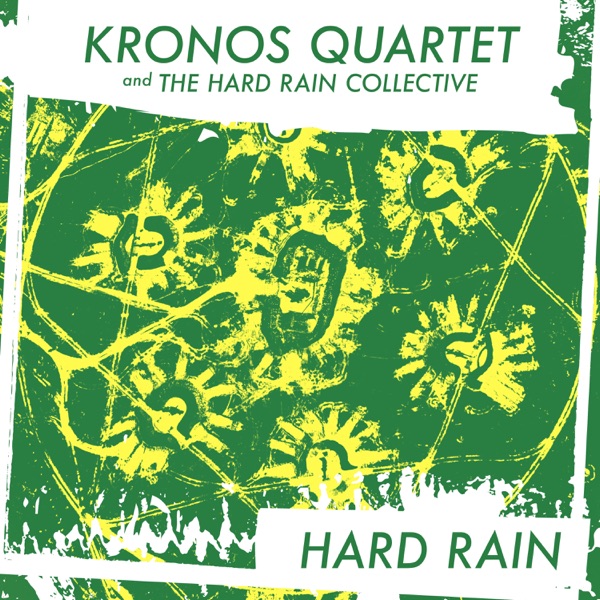
The Kronos Quartet's large-scale program created in collaboration with the Bulletin of the Atomic Scientists and inspired by the Doomsday Clock. The project grew out of a Kronos performance in Chicago for a gathering of Nobel Prize-winning physicists addressing existential threats such as nuclear weapons, climate change, and artificial intelligence. That performance, which combined music with readings from Hiroshima survivors, world leaders, and historical archives, sparked a program exploring the fragility of civilization and honoring the scientists working to safeguard it.
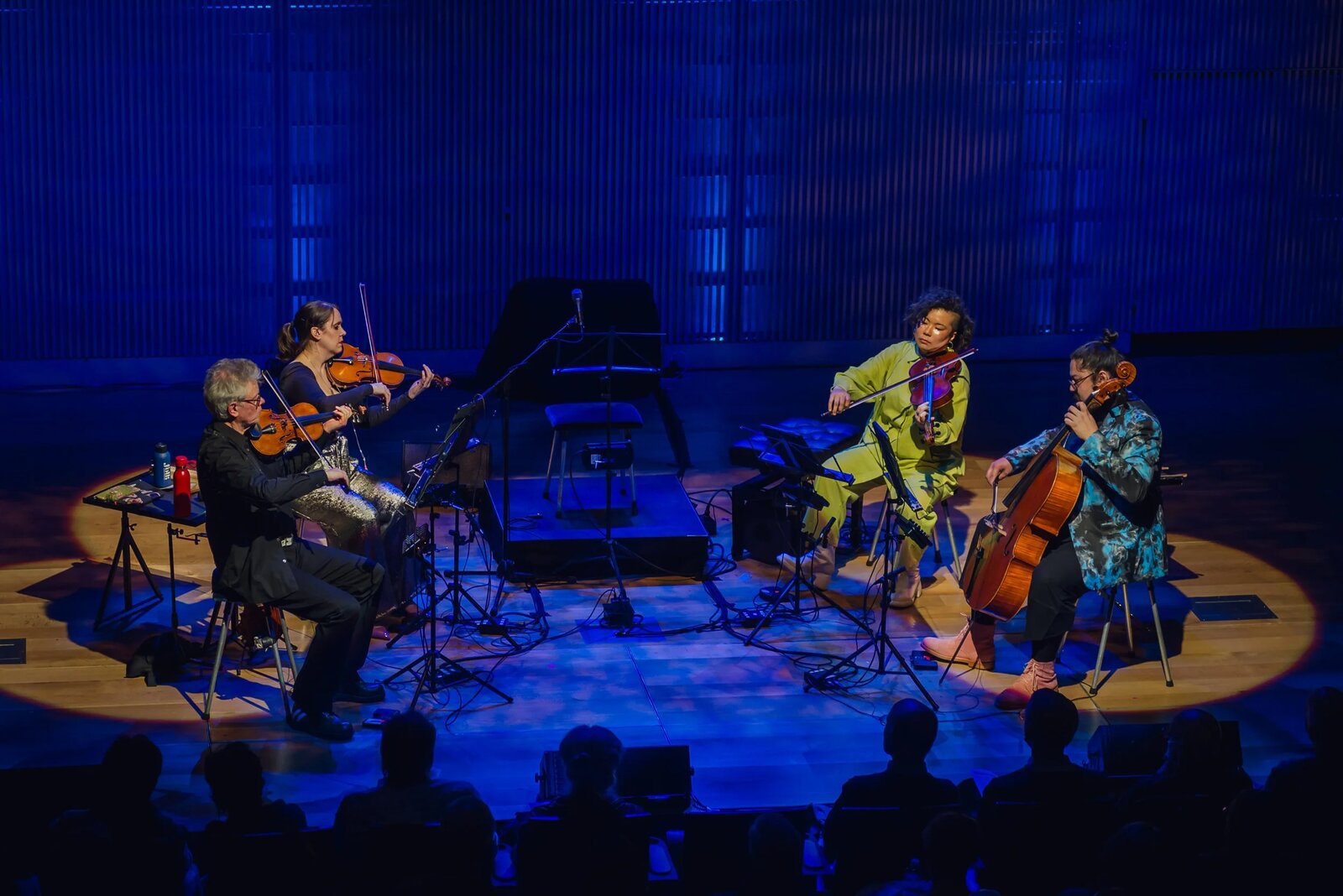
Philip Glass at 90
String Quartet
To celebrate Philip Glass's 90th birthday, the Kronos Quartet presents an all-Glass program journeying through the composer's string quartets, his film scores for Mishima and Dracula, and the Quartet Satz from Kronos’s Fifty for the Future library. The program also features reimaginings of Glass's music by Brian Carpenter and Aftab Darvishi. Kronos draws on its long history of collaboration with Glass, having recorded an album of his quartets and premiered his String Quartets Nos. 6 and 7.
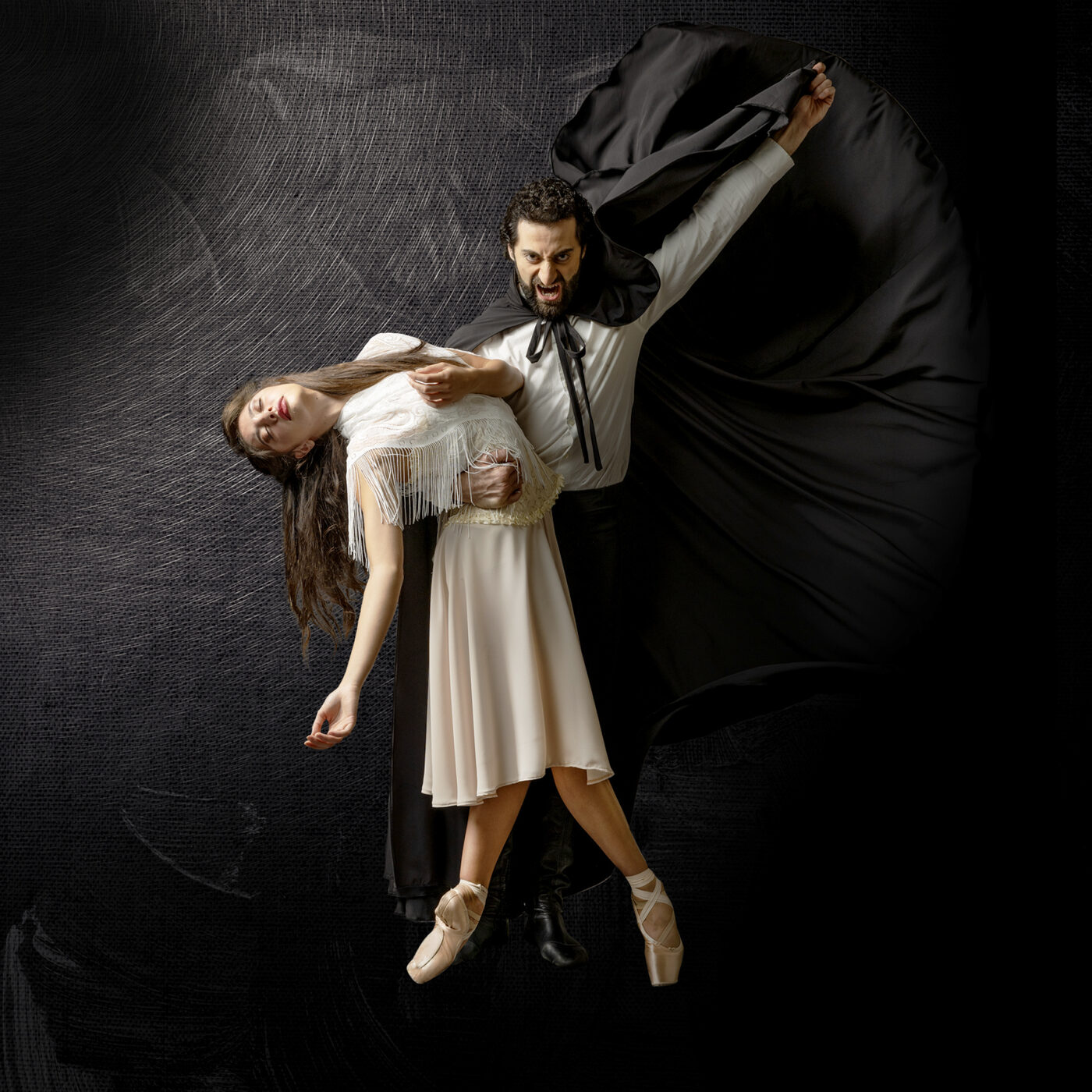
Dracula, a dark shadow
String Quartet with ballet company
In 1998 Universal Pictures asked Philip Glass to write the first true score for Tod Browning's 1931 Dracula, a film that had reached audiences almost entirely without music. Glass chose a string quartet, and the Kronos Quartet recorded it for Nonesuch the following year. For years after, Kronos and Glass performed the score live beneath the film around the world. Nearly three decades later the same music has been given a body. Dracula, a dark shadow is a newly commissioned ballet by Nicolas Blanc for State Street Ballet, with twenty dancers, costumes by Ben-Oni Cortes, sets and lighting by Jack Mehler, and the Kronos Quartet performing the score live onstage alongside the company. The production premieres October 30 and 31, 2026 at the Granada Theatre in Santa Barbara. MKI Artists tours the full production beginning in Fall 2028.
The Evolving World of Kronos
String Quartet
For over fifty years, San Francisco's Kronos Quartet has challenged and reimagined what a string quartet can be, transforming a form once centered on long-established European traditions into a living art. In keeping with that ethos, the Quartet builds a tailor-made concert experience for each presenter, drawing on today's most pressing issues, from war and climate change to the struggle for civil rights.
Fifty for the Future
String Quartet
The Kronos Quartet's commissioning and education initiative, developed by the nonprofit Kronos Performing Arts Association with lead partner Carnegie Hall. The project commissioned 50 new works for string quartet from composers around the world, designed expressly to train students and emerging professionals in the techniques of 21st-century repertoire. All scores, parts, recordings, and learning materials are available free of charge online. Now complete, the library has been used by musicians in more than 100 countries.
Glorious Mahalia
String Quartet
This Kronos Quartet program honors iconic American activist voices of the 20th century and beyond, paying homage to gospel legend Mahalia Jackson and her vital friendships with Dr. Martin Luther King, Jr. and oral historian Studs Terkel. A daughter of Jim Crow Louisiana and the Great Migration, Jackson was a central voice of the civil rights movement. Her legacy grounds two major works: Zachary J. Watkins's Peace Be Till, featuring the recorded voice of King's lawyer Clarence B. Jones, and Stacy Garrop's Glorious Mahalia, built on a recorded interview between Jackson and Terkel.