
ENSEMBLE · STRING QUARTET
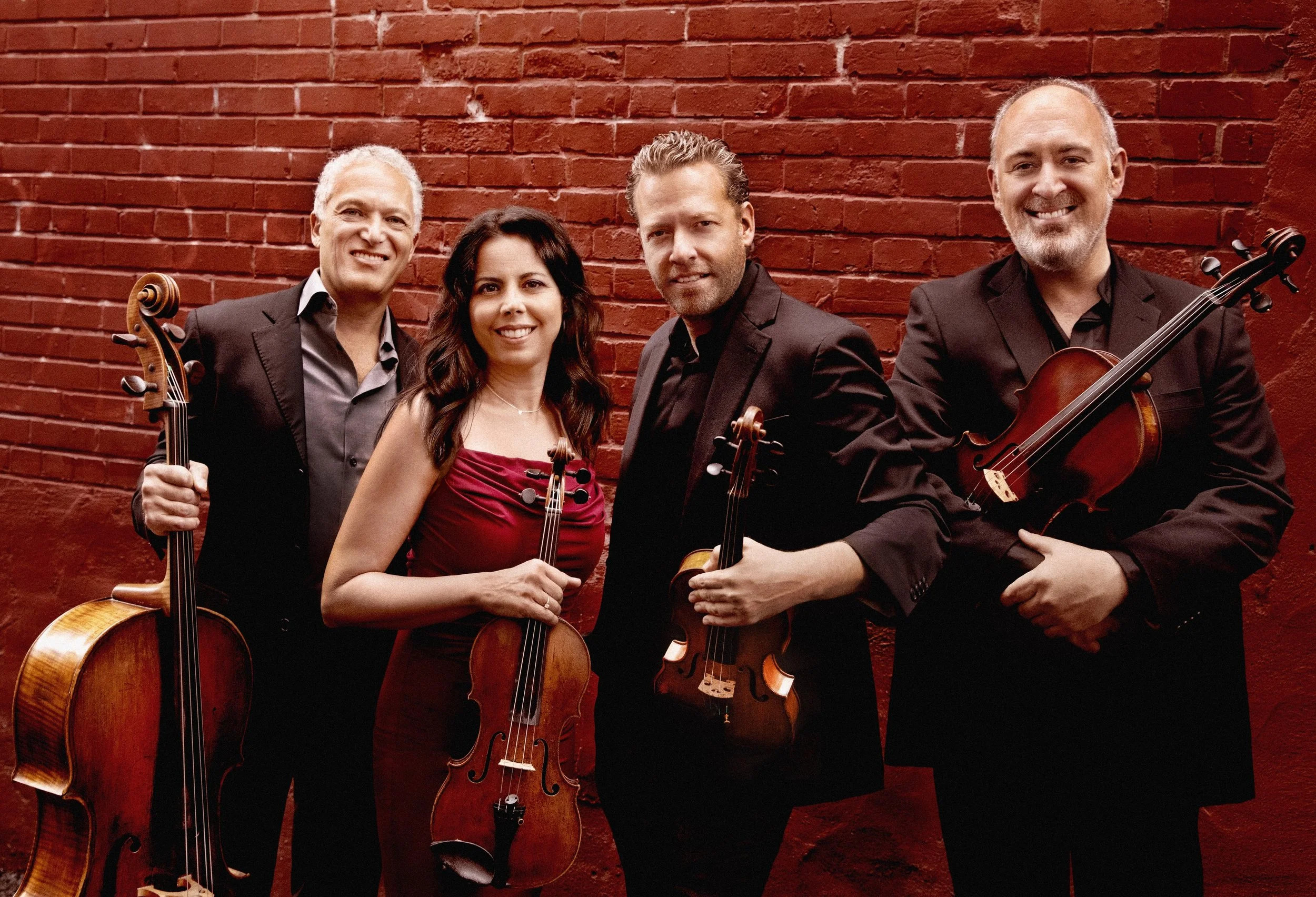
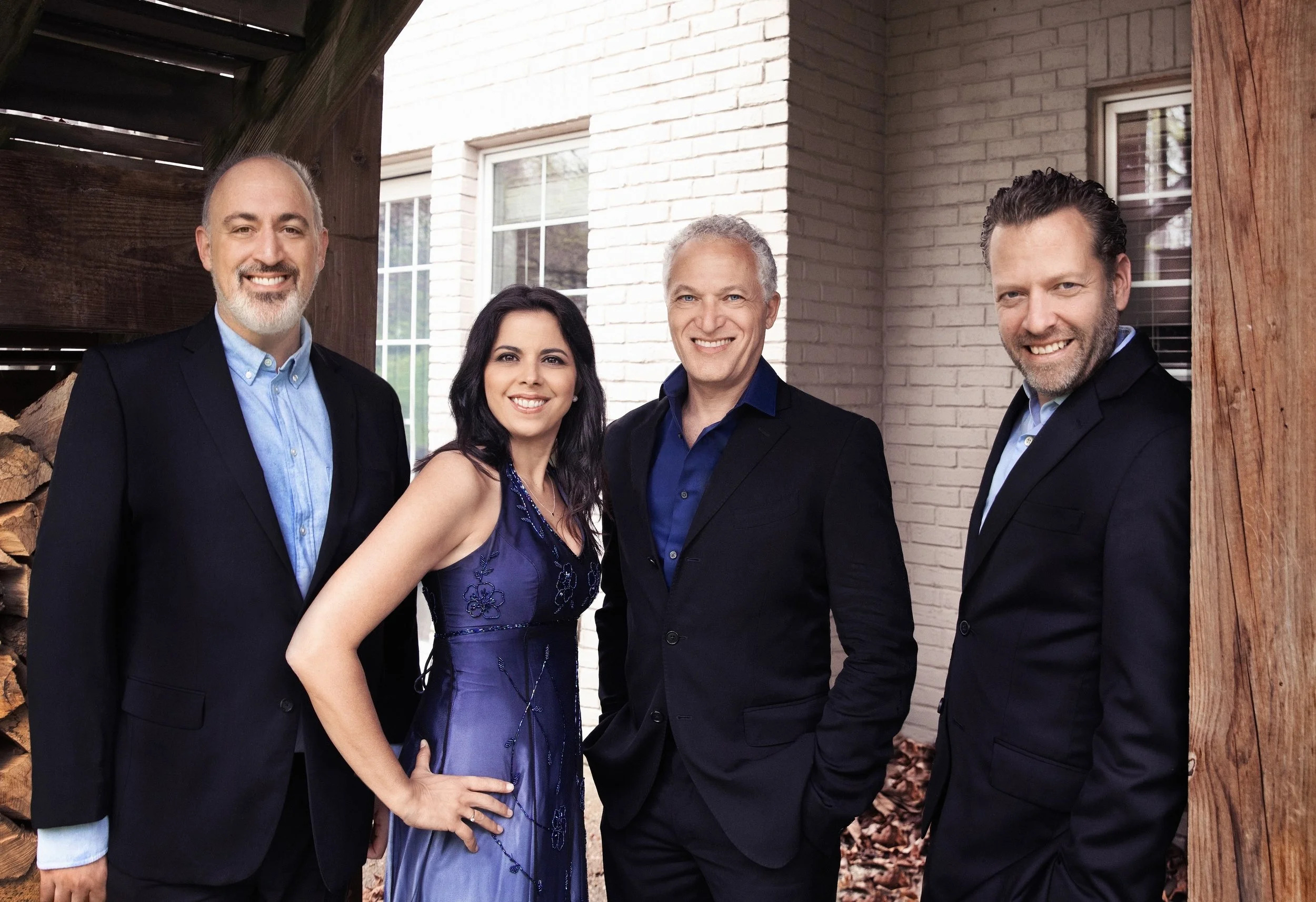
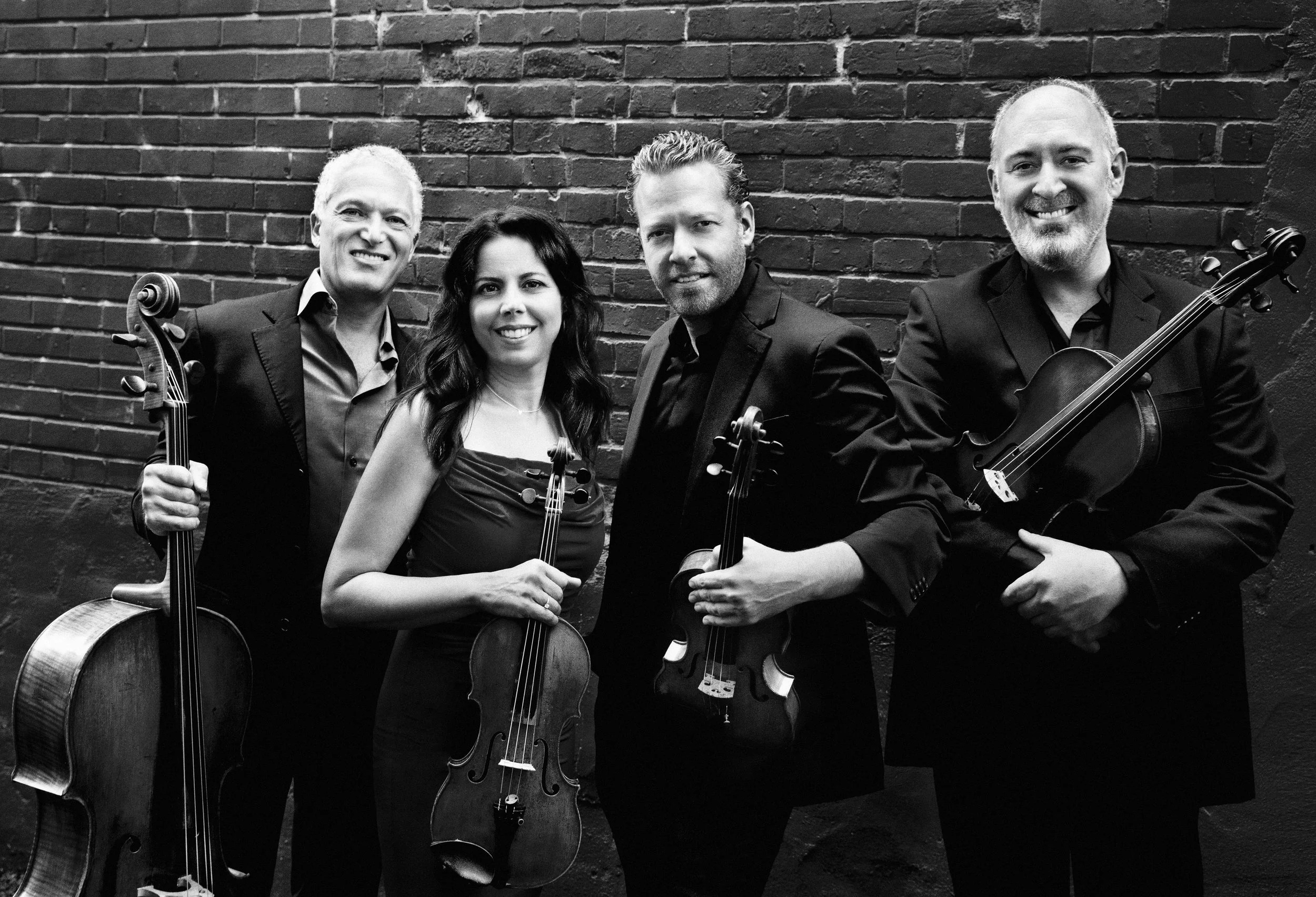
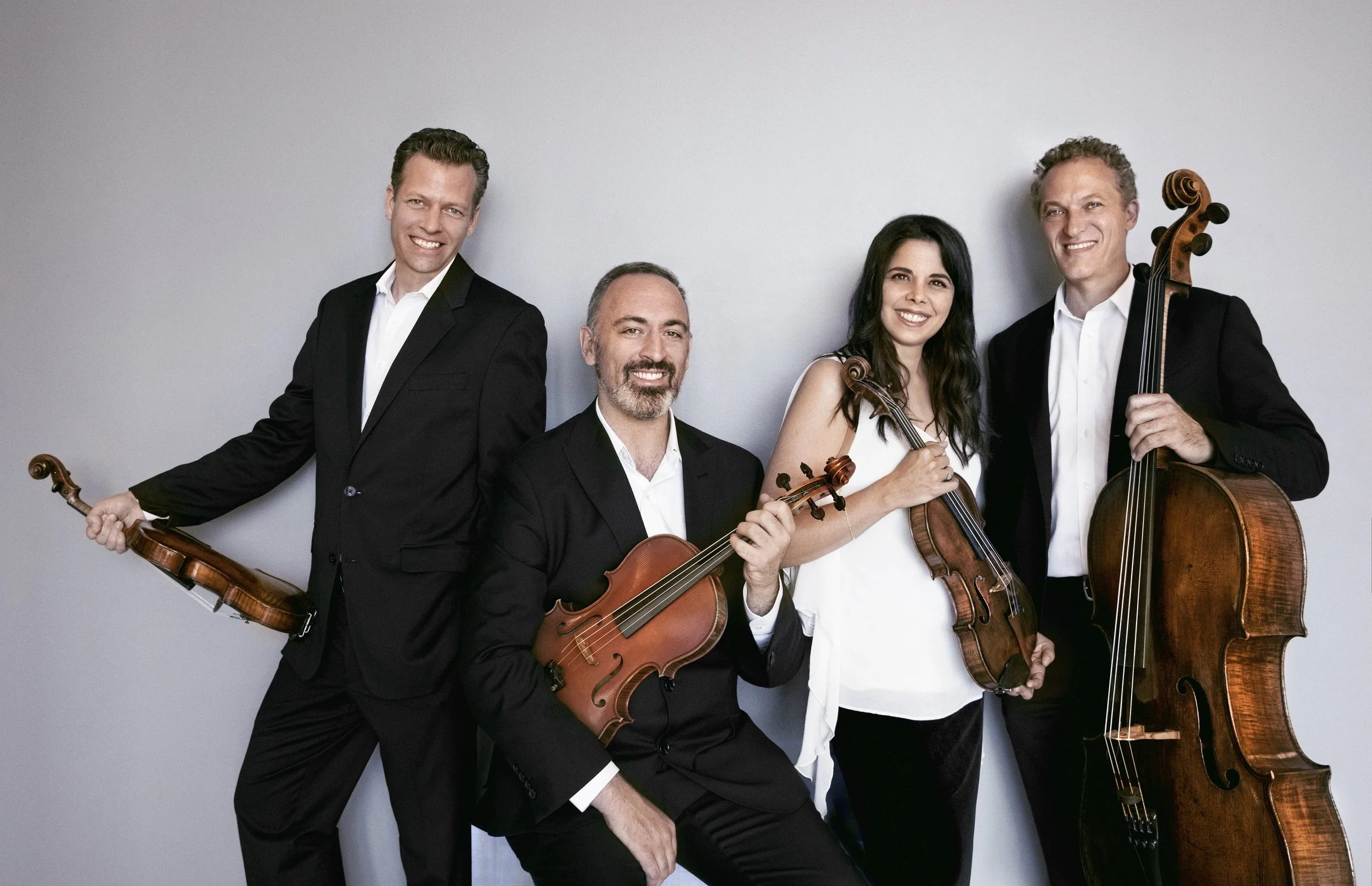
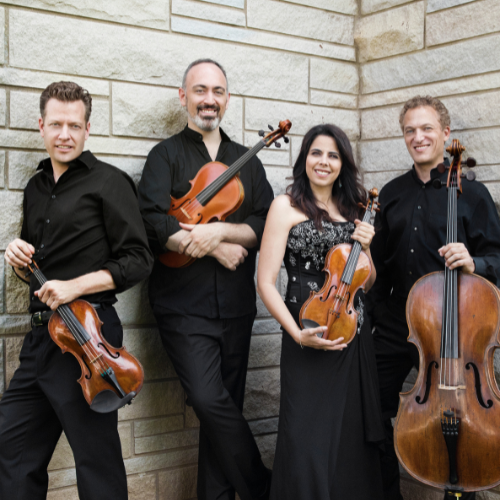
Pacifica Quartet
2x Grammy
Award-winning Fearless Repertory
Complete cycles of Beethoven, Shostakovich, Carter & Mendelssohn performed worldwide Indiana University
Quartet-in-Residence ABOUT
With a career spanning three decades, the multiple Grammy Award-winning Pacifica Quartet has achieved international recognition as one of the finest chamber ensembles performing today. Known for delivering performances that are “engrossing, characterful…with a luminescent tranquillity [and] spine-tingling intensity” (The New York Times), the Quartet is celebrated for its virtuosity, exuberant performance style, and fearless repertory choices. Its sound, distinguished by “warmth of phrasing, dynamic control and superbly coordinated ensemble balance” (Gramophone Magazine), has solidified the ensemble as one of the most essential voices in American chamber music.
The Pacifica Quartet appears this season throughout the United States, with engagements in Detroit, Indianapolis, and Salt Lake City, as well as appearances at Duke University, the University of Notre Dame, and the UCLA Clark Library. In the 2026-27 season, the Quartet also returns to Centrum in Port Townsend, Washington, for a week-long residency of performances, teaching, and community engagement.
Formed in 1994, the Pacifica Quartet quickly rose to prominence, winning chamber music’s top competitions, including the 1998 Naumburg Chamber Music Award. In 2002, the ensemble received Chamber Music America’s Cleveland Quartet Award and was named to Lincoln Center’s Bowers Program (formerly CMS Two). Four years later, it received the prestigious Avery Fisher Career Grant, affirming its position among the foremost American quartets. With its powerful energy and captivating, cohesive sound, the Pacifica has established itself as the embodiment of the contemporary American string quartet sound. In 2026, the Pacifica received the Ruth Bader Ginsburg award from Washington Performing Arts.
Read full biography
An ardent advocate for living composers, the Pacifica Quartet has commissioned and premiered works by Keeril Makan, Julia Wolfe, and Shulamit Ran. Ran’s Glitter, Doom, Shards, Memory – commissioned in partnership with the Music Accord consortium, Wigmore Hall, and Tokyo’s Suntory Hall – received its New York premiere with the Chamber Music Society of Lincoln Center. In 2024, the Quartet premiered James Lee III’s Double Standard – commissioned by Carnegie Hall and Shriver Hall Concert Series – with soprano Karen Slack. Based on a poem by Frances Ellen Watkins Harper, the work was widely acclaimed for its vivid narrative power, with one critic describing the performance’s “spine-tingling intensity” (The New York Times).
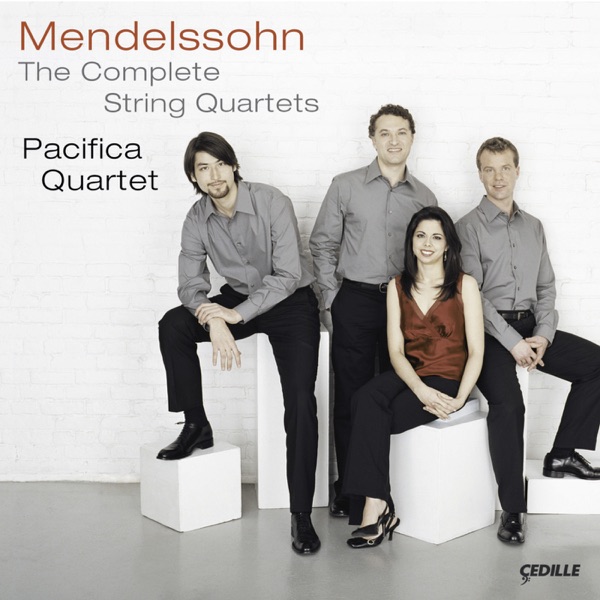
The Pacifica Quartet has proven itself to be the preeminent interpreter of string quartet cycles, harnessing the group’s singular focus and incredible stamina to portray each composer’s evolution, often over the course of just a few days. Its acclaimed presentations have included highly praised performances of the complete Carter cycle in San Francisco, New York, Chicago, and Houston; the Mendelssohn cycle in Napa, Australia, New York, and Pittsburgh; the monumental Shostakovich cycle in Chicago, New York, Montreal, and London; and the Beethoven cycle in New York, Denver, St. Paul, Chicago, Napa, and Tokyo, where the Quartet gave an unprecedented presentation of five concerts in three days at Suntory Hall.
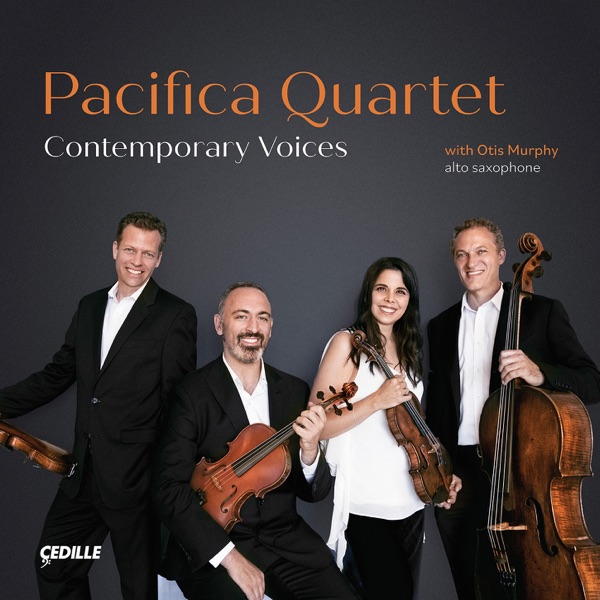
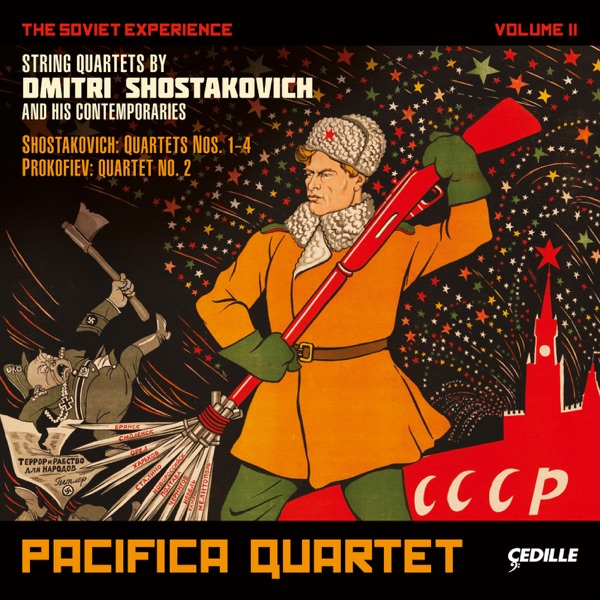
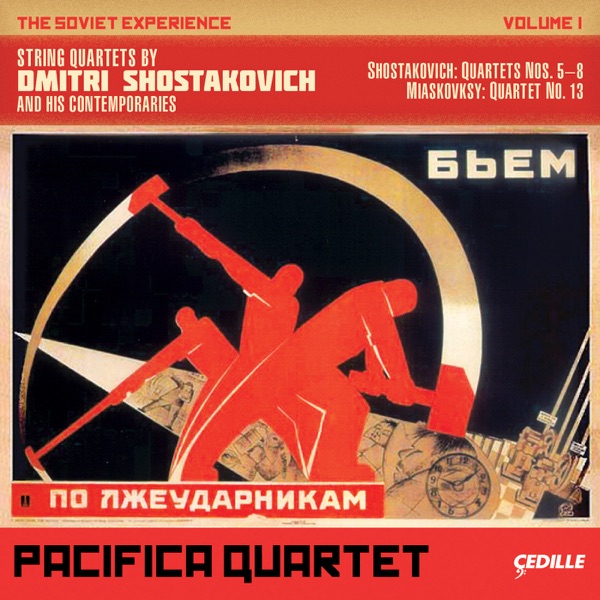
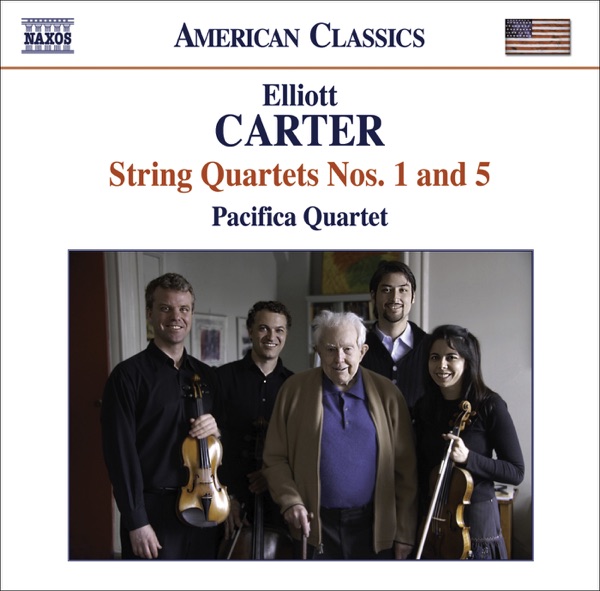
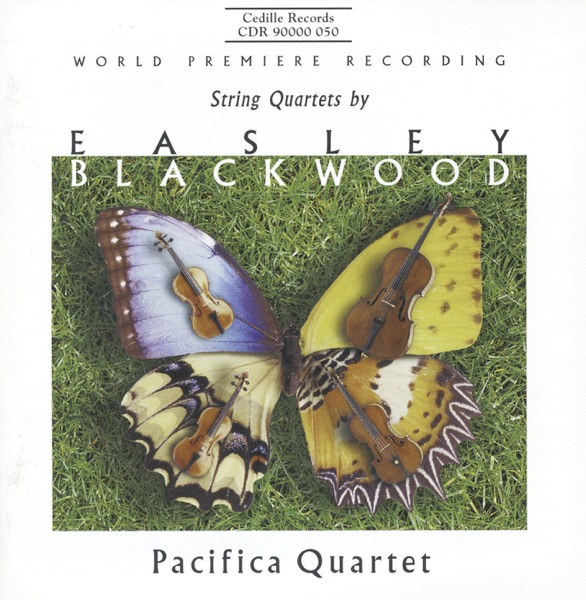
The ensemble’s acclaimed discography reflects its adventurous spirit. Its Grammy Award-winning recordings of Elliott Carter’s Quartets Nos. 1-5 on Naxos and the complete Shostakovich cycle on Cedille Records – praised by The Telegraph as “nothing short of phenomenal” – are now reference points for those repertoires. Other notable collaborations include Leo Ornstein’s Piano Quintet with Marc-André Hamelin, the Brahms Piano Quintet with Menahem Pressler, and the Brahms and Mozart Clarinet Quintets with Anthony McGill. Their most recent Grammy-winning album, Contemporary Voices (Cedille Records), showcases works by Shulamit Ran, Jennifer Higdon, and Ellen Taaffe Zwilich; the Chicago Tribune named it among the “Best Classical Recordings of 2020,” praising the Quartet’s “unmistakable and apt ferocity.” A second recording with Anthony McGill, American Stories, featured world premiere recordings by Richard Danielpour, James Lee III, and Ben Shirley, as well as a piece by Valerie Coleman, and was nominated for a 2024 Grammy Award.
Based in Bloomington, Indiana, the Pacifica Quartet has served as full-time faculty and Quartet-in-Residence at Indiana University’s Jacobs School of Music since 2012. They previously held residencies at the University of Illinois at Urbana-Champaign (2003-2012), the Metropolitan Museum of Art in New York (2009-2012), and the University of Chicago, where they served as resident performing artists for 17 years.
PRESS & REVIEWS
What the critics say
“engrossing, characterful…with a luminescent tranquillity [and] spine-tingling intensity”
— The New York Times
“warmth of phrasing, dynamic control and superbly coordinated ensemble balance”
— Gramophone Magazine
“….top of the class…”
— The Strad
“…virtually every bar sounds freshly minted.”
— BBC Music Magazine
Discography
Recordings
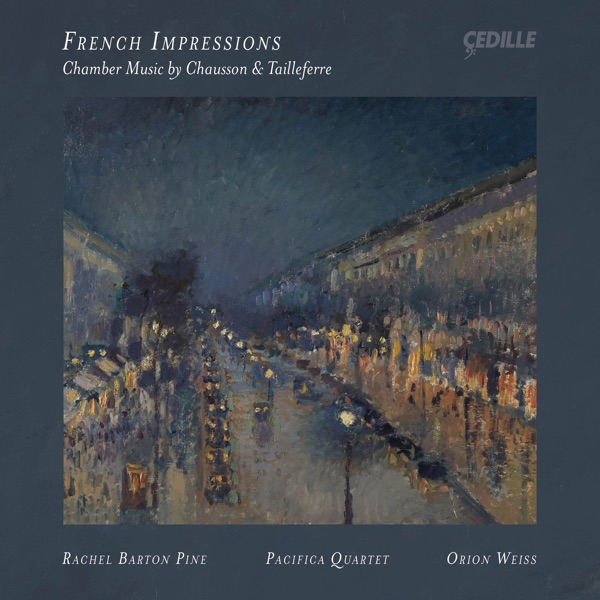
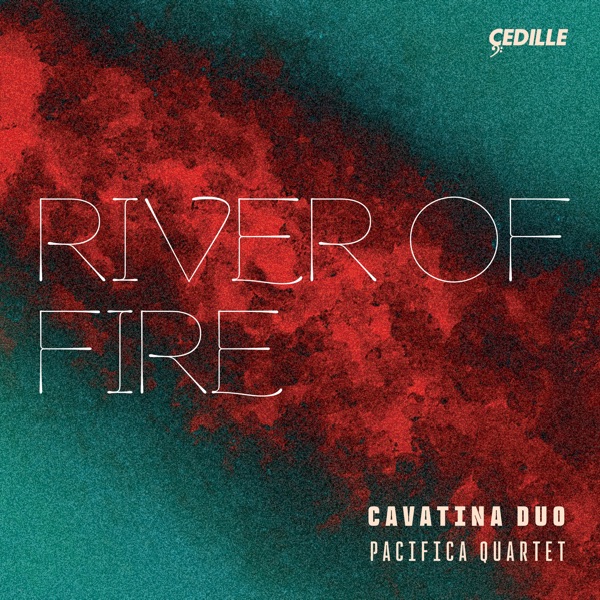


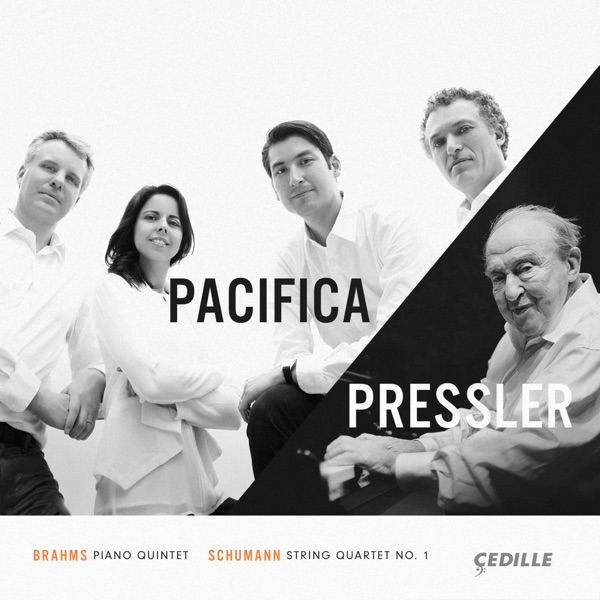
Brahms: Piano Quintet, Op. 34 - Schumann: String Quartet, Op. 41 No. 1
Cedille Records · 2017



VIDEOS
Videos
2026-27
Programs & Repertoire
Program One
- George Walker Lyric for Strings
- Gabriela Lena Frank New Work for Narrator & String Quartet (with Narrator, TBD)
- Intermission
- Ludwig van Beethoven String Quartet No. 13 in B-flat major, Op. 130
Program Two
- Florence Price String Quartet in G Major
- Jennifer Higdon New Work for Narrator & String Quartet (with Narrator, TBD)
- Intermission
- Ludwig van Beethoven String Quartet No. 13 in B-flat Major, Op. 130
Program Three
- Charles Ives String Quartet No. 1, “From the Salvation Army”
- Shulamit Ran String Quartet No. 3, “Glitter, Doom, Shards, Memory”
- Intermission
- Ludwig van Beethoven String Quartet No. 14 in C-sharp Minor, Op. 131
Program Four
- Charles Ives String Quartet No. 2
- Jennifer Higdon Voices
- OR
- Elliott Carter String Quartet No. 2
- Intermission
- Ludwig van Beethoven String Quartet No. 12 in E-flat major, Op. 127
Program Five
- Louis Gruenberg Four Divisions for String Quartet, Op. 32
- Ruth Crawford Seeger String Quartet (1931)
- Intermission
- Ludwig van Beethoven String Quartet No. 16 in F Major, Op. 135
Program One
Metamorphosis
- Claude Debussy String Quartet in G minor, Op. 10
- György Ligeti String Quartet No. 1, "Métamorphoses nocturnes"
- Intermission
- Ludwig van Beethoven String Quartet in B-flat major, Op. 130 with Grosse Fuge, Op. 133
Transformation lies at the heart of the string quartet tradition. Each work on this program reshapes musical language, form, and expressive possibility.
Ligeti’s Métamorphoses nocturnes takes its title literally: a single musical idea evolves continuously through shifting characters, textures, and moods. Debussy’s quartet dissolves traditional boundaries through color and atmosphere, transforming harmonic language and redefining the sonic palette of the ensemble. Beethoven’s Op. 130, culminating in the monumental Grosse Fuge, stands as one of the most radical acts of musical transformation in history — a work that challenged expectations of form, structure, and listener perception.
Together, these works trace metamorphosis across eras, revealing the quartet as a site of constant reinvention.
Program Two
Untranslatable: Music Beyond Words
- Joseph Haydn String Quartet in B minor, Op. 33, No. 1
- James Lee III String Quartet No. 3, "Untranslatable" (New Work)
- Intermission
- Franz Schubert String Quartet in D minor, D. 810, "Death and the Maiden"
Music often speaks most clearly where language falls short. This program explores the quartet as a vehicle for emotional and cultural expression beyond words.
Haydn’s Op. 33 quartets transformed the genre into a true conversation among equals, establishing a musical language that continues to resonate today. In Untranslatable, James Lee III draws inspiration from words across cultures that resist precise definition, each movement capturing complex emotional states — longing, anticipation, compassion, and joy — through sound alone. Schubert’s Death and the Maiden brings the program to its emotional apex, confronting mortality with music of extraordinary intensity and vulnerability.
Across centuries, these works affirm music’s power to communicate the deepest aspects of human experience — those that cannot be fully translated into speech.
Program Three
Heroic Voices: Autobiography & Identity
- Bedřich Smetana String Quartet No. 1 in E minor, "From My Life"
- Sean Shepherd String Quartet No. 3
- Intermission
- Ludwig van Beethoven String Quartet in C major, Op. 59, No. 3, "Razumovsky"
For many composers, the string quartet becomes a space for personal declaration — a place to assert identity, tell one’s story, and engage with the heroic traditions of the past.
Beethoven’s Op. 59 No. 3 expands the quartet into a bold, symphonic scale, embodying the heroic spirit that defines much of his middle-period writing. Smetana’s From My Life is one of the earliest autobiographical quartets, tracing moments of love, artistic awakening, and personal struggle with striking immediacy. Sean Shepherd’s Third Quartet reflects on the weight of this tradition, acknowledging the legacy of past masters while presenting a sharply contrasted, virtuosic, and contemporary voice.
Together, these works explore the quartet as a medium for personal and artistic identity — heroic, reflective, and continually renewed.
On Stage
Featured Projects
A Double Standard
String Quartet
A song cycle by composer James Lee III for soprano and string quartet, commissioned by Carnegie Hall, Chamber Music Detroit, and the Shriver Hall Concert Series for soprano Karen Slack and the Pacifica Quartet. The work sets the poem of the same name by 19th-century Baltimore poet Frances Ellen Watkins Harper, a free Black woman. Slack and the Pacifica Quartet gave the premiere in 2024, with performances pairing the cycle alongside works by Beethoven and Florence Price.
American Stories
Clarinet and String Quartet
American Stories is Anthony McGill's Grammy-nominated album and touring program with the Pacifica Quartet (Cedille), chronicling unique perspectives shaped by the American experience through works by Valerie Coleman, Richard Danielpour, James Lee III, and Ben Shirley. McGill earned his first Grammy nomination for Best Chamber Music/Small Ensemble Performance for the recording.
Pitch In
String Quartet
The Pacifica Quartet teams up with composer James Lee III on a new ten-minute work for children's choir and string quartet. Centered on the theme of hunger and food insecurity, the piece sets text from the poem "Pitch In" by Sylvia Dianne Beverly, pairing the quartet with a local youth choir in each community.
Revolutionary Angels
String Quartet
A concert cycle conceived by the Pacifica Quartet for the 2026-27 season, marking the convergence of America's 250th anniversary and the bicentennial of Beethoven's death. The program anchors the late Beethoven string quartets alongside works by American composers, including two new commissions for narrator and string quartet honoring significant American women, written by Jennifer Higdon and Gabriela Lena Frank. Additional repertoire draws on American composers Ruth Crawford Seeger, Florence Price, and Shulamit Ran.
Songs and Dances "From the New World"
String Quartet and Guitar
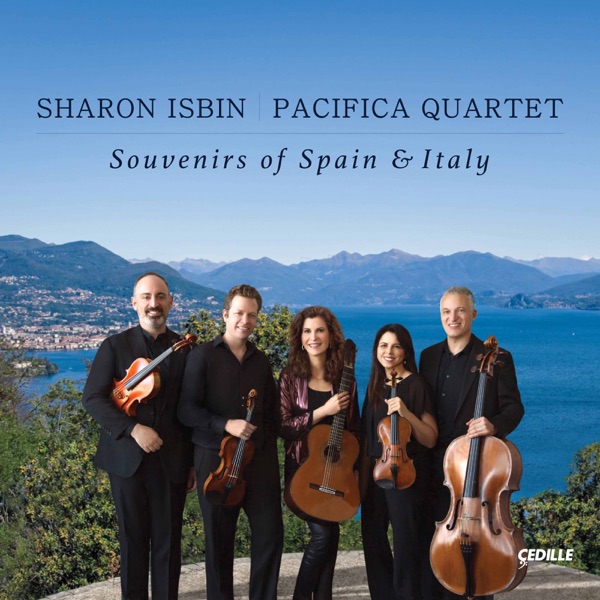
After first teaming up at the Aspen Music Festival, the Pacifica Quartet and iconic guitarist Sharon Isbin — called "one of the best guitarists in the world" (Boston Globe) — have thrilled audiences ever since. The Grammy-winning artists recorded Souvenirs of Spain & Italy for Cedille in 2019, featuring works by Turina, Castelnuovo-Tedesco, Vivaldi, and Boccherini.
The Korngold Collection
String Quartet
A concert and recording project celebrating the Pacifica Quartet's 30th anniversary (1994-2024). It presents the complete string quartets of Erich Wolfgang Korngold, tracing his development from teenage prodigy in Vienna to celebrated Hollywood film composer. In addition to the three quartets, the project features Korngold's String Sextet and Piano Quintet, performed with chamber-music partners including pianist Orion Weiss.